
Running a Sex Offender Check in St. Mary Parish
The official source is the Louisiana State Sex Offender and Child Predator Registry, administered through Louisiana State Police Bureau of Criminal Identification and Information. Use that gateway instead of a commercial people-search page. It supports person-based and geographic approaches, allowing a reader to check a known name or review the area around an address, city, ZIP code, or parish as the live interface permits.
The official Louisiana gateway is the starting point for a St. Mary Parish registry lookup:
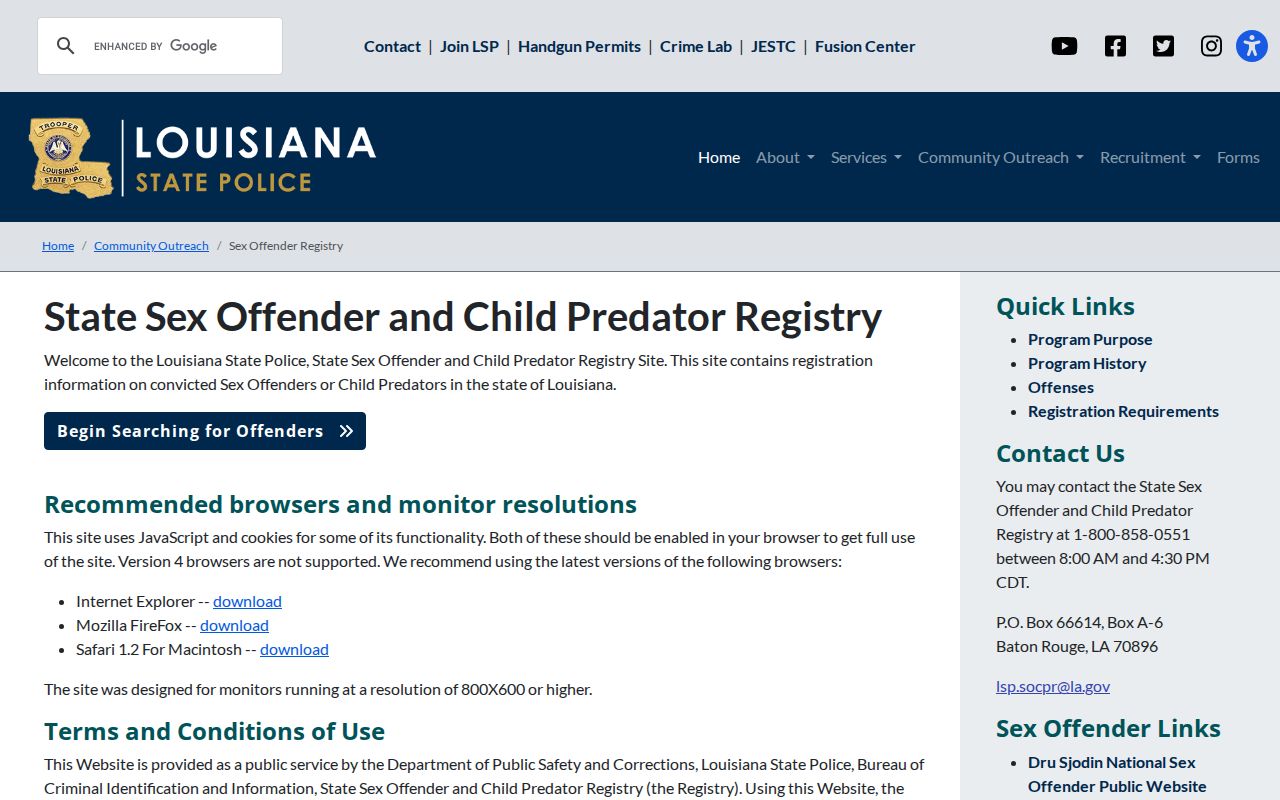
The St. Mary Parish Sheriff's Office participates in registration and verification. Contact it to confirm the current appointment location, required documents, and procedure; fixed local desk hours or a registration fee were not verified in the research.
Parish Search Versus Address Radius
A parish filter produces a broad St. Mary Parish result set. It is useful for community awareness across Morgan City, Franklin, Patterson, and unincorporated areas, but the list may be longer than an address-centered search. An address search begins with a specific street location and uses only the radius choices displayed by the live system. City and ZIP searches occupy the middle ground.
Geography should be checked twice when an expected profile is missing. City mailing names and parish boundaries do not always line up intuitively, and a person may have moved or registered under another address category. Search the parish, then try the relevant city or ZIP and a name or alias. Never infer that no duty exists merely because one narrow query returns no result.
Searching the Louisiana State Sex Offender and Child Predator Registry
- Open the official LSP registry gateway and read and accept its current conditions, accuracy notice, and lawful-use warning.
- Choose a person search or geographic search. Enter a name, or supply the address, city, ZIP, or St. Mary Parish filter requested by the live form.
- Compare the results using the displayed photograph, aliases, physical description, location, and other identifiers rather than relying on a name alone.
- Open the full official profile and read the offense, jurisdiction, registration category, status, registering agency, and verification details together.
| Field Label | Type | Required | Notes |
|---|---|---|---|
| First / Last Name | Text | Varies | Spelling and aliases affect results. |
| Address | Text | Address search | Use street and locality fields requested live. |
| City | Text / dropdown | No | Narrows a geographic search. |
| ZIP Code | Text | No | Uses a five-digit area. |
| Parish/County | Dropdown | No | Select St. Mary for parish-wide results. |
| Radius | Dropdown | Address-dependent | Use only choices presented live. |
When a Search Result Is Missing
Begin with simple causes: reverse first and last name if necessary, check spelling, search a known alias, remove an overly narrow city filter, and try the parish-wide option. Geographic and name searches answer different questions. A result may also reflect a reporting update that has not yet propagated through every view.
If official registration information appears inaccurate or outdated, record the profile URL and the specific discrepancy, then contact the St. Mary Parish Sheriff's Office or Louisiana State Police. Do not visit the displayed address, confront anyone, publish accusations, or attempt personal verification. Law enforcement can compare the public entry with nonpublic registration records and decide whether follow-up is required.
A result list also requires identity matching. Common names can produce several profiles, and a photograph alone may be old or insufficient. Compare aliases, age or birth information when displayed, physical characteristics, qualifying-offense jurisdiction, and the registering agency. If the identifiers do not align, do not treat the profile as belonging to the person being researched. The official agency - not a social-media post or copied profile - is the appropriate source for clarification.
What a Registry Profile Shows
| Name & Aliases | Legal or display name and known aliases made public under registry rules. |
|---|---|
| Photo & Description | Photograph; sex, race, age or birth information as allowed; height, weight, hair and eye color; and identifying marks. |
| Registered Address | Residence or address information presented under the applicable public-display requirements. |
| Offense & Jurisdiction | Qualifying offense, conviction information, statute or jurisdiction details when populated. |
| Category | Registration category and duration-related information; Louisiana uses statutory categories rather than a simple prediction of risk. |
| Status | Compliance information, registering agency, and verification-related details shown on the current profile. |
Vehicles and other statutorily collected details can appear when populated, so profiles are not always identical. A missing field is not permission to fill the gap with rumor or information from an unofficial source.
A Registry Profile Is Not a Rap Sheet
The registry is a specialized public-notification record tied to qualifying offenses and continuing statutory duties. It does not list every arrest, every court case, or a person's complete Louisiana criminal history. Conversely, a parish court docket may show a prosecution without establishing a current registration duty. For the charging instrument or judgment, use St. Mary Parish criminal court records; for a self-review of fingerprint-supported repository information, follow Louisiana State Police's official personal-record process.
Compliance status also requires care. A status label describes registry administration at the time of the published record; it should not be reworded as an accusation of a new offense. Open the full profile, note its current date and registering agency, and ask law enforcement about a suspected discrepancy.
Registration Requirements and Levels in Louisiana
Louisiana R.S. 15:542 establishes registration duties and short reporting periods for residence and other events. The statute page documents the legal framework:
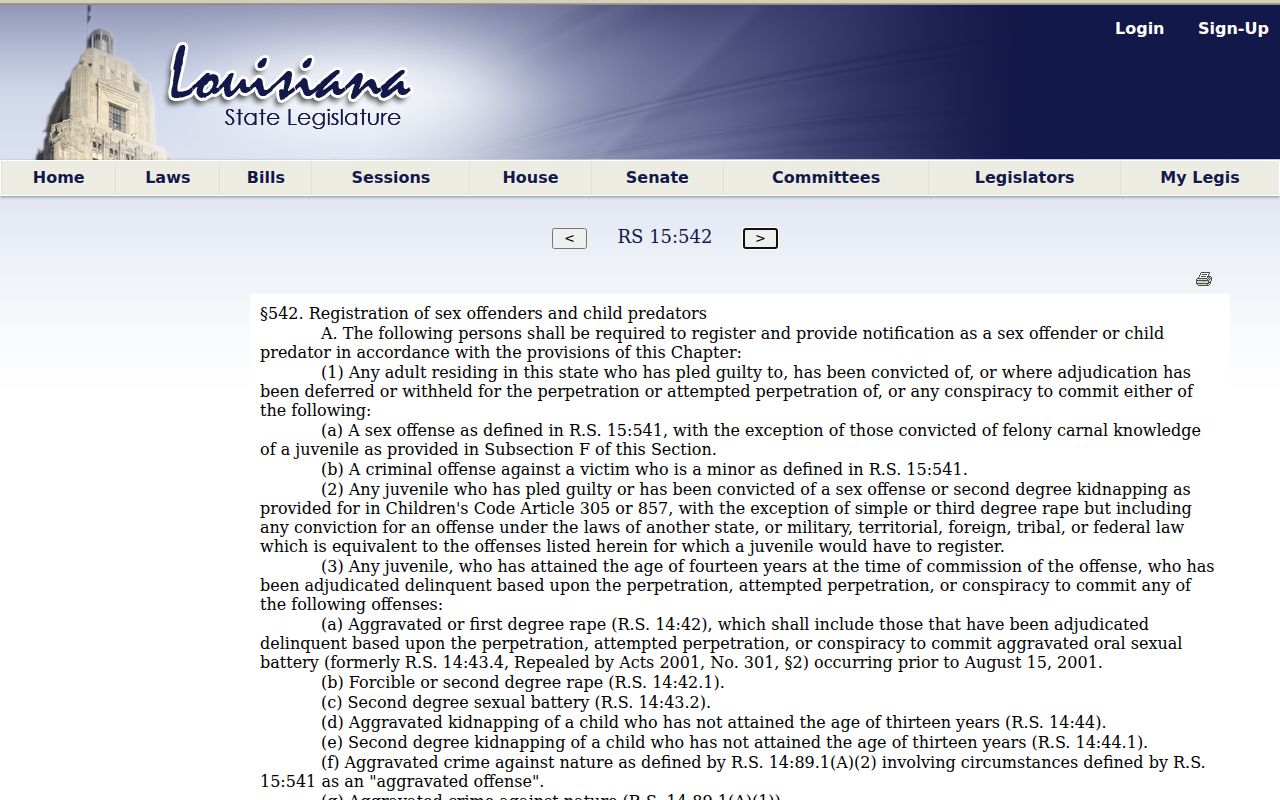
Local verification occurs through the parish sheriff within that statewide system; the live statute and agency instructions control the exact duty for an individual case.
| Category | Duration | Important Qualification |
|---|---|---|
| General registrant | 15 years | May seek reduction to 10 after a qualifying clean-record period and treatment documentation under §544(E). |
| Offense against a minor as defined | 25 years | Statutory details and later events can alter the calculation. |
| Aggravated, repeat, and specified categories | Lifetime | Section 544(B)(2) and court-ordered lifetime provisions may apply. |
Fifteen, Twenty-Five, or Lifetime
The duration categories come from Louisiana R.S. 15:544, not from a locally invented three-tier risk chart. The statute's current text is the source for duration, reduction criteria, and the effect of later qualifying events.
The official duration statute provides the controlling statewide detail:
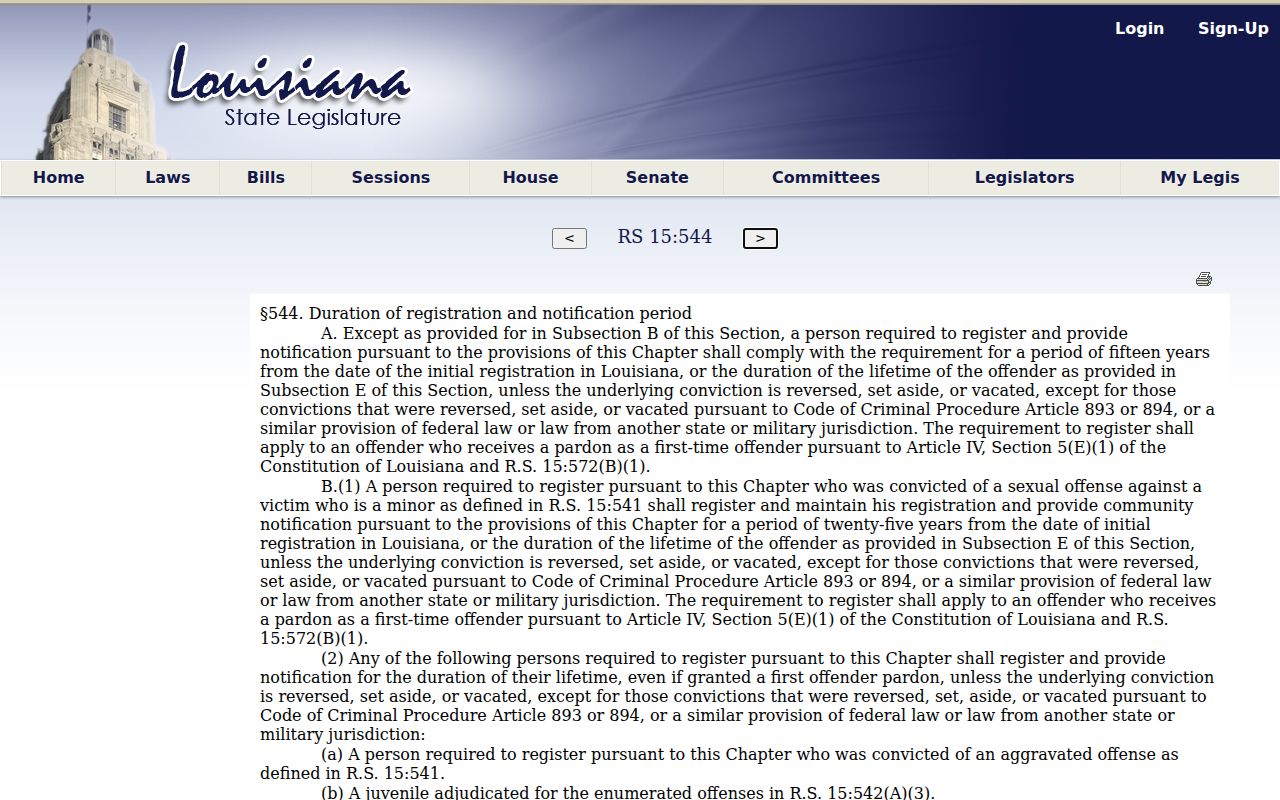
A displayed duration should never be calculated from the conviction label alone. Offense category, conviction history, dates, court orders, reduction rules, and later events can affect the result. Direct case-specific legal questions to the registering agency or qualified counsel.
Cross-State Searches Through NSOPW
The Dru Sjodin National Sex Offender Public Website adds a national, cross-jurisdiction search layer. It is useful when a name or safety question extends beyond Louisiana, but each participating jurisdiction remains responsible for its underlying profile. Return to the linked state or tribal record for the freshest details and the governing warnings.
NSOPW's national search illustrates the broader geographic channel:
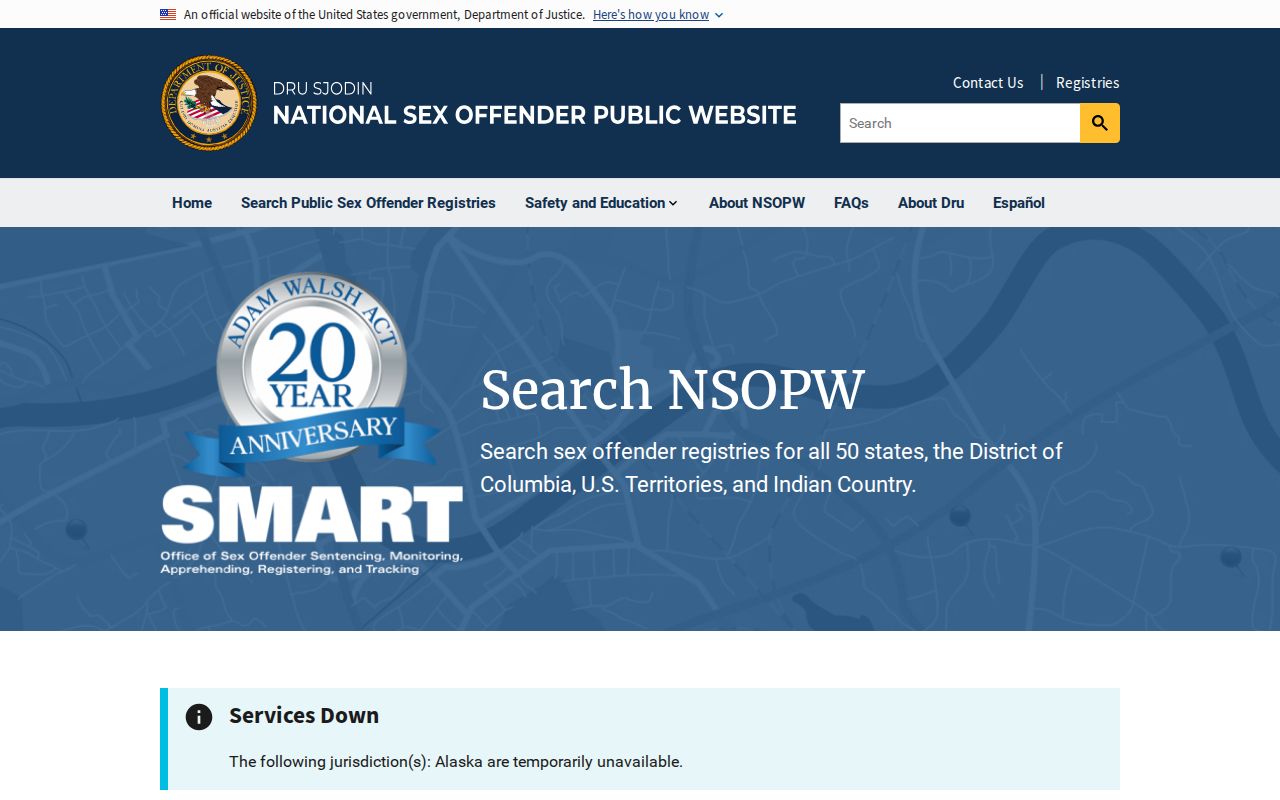
For a person believed to be in St. Mary Parish, compare the national result with the Louisiana profile and parish geography. Differences should be reported to the listed agency, not resolved through confrontation.
National coverage is especially useful when a move crosses a state line or when the correct jurisdiction is uncertain. Even then, search names and aliases carefully and follow the result back to the originating registry. Participating systems can use different field labels, update schedules, and public-display rules, so the absence of a detail on one profile does not establish that the underlying agency never collected it.
Lawful Use and Community Notification
Registry information exists for awareness and safety planning. Read current profiles, use official geographic tools, discuss age-appropriate safety practices, and report specific suspected noncompliance to law enforcement. The St. Mary Parish Sheriff's Office and LSP - not private searchers - perform verification and enforcement. A public profile does not authorize trespass, surveillance, threats, repeated unwanted contact, or republication stripped of its accuracy warning.
Use registry data lawfully: Louisiana's registry warns that information may not be used to harass, threaten, intimidate, or commit a crime against a registrant or household. Registry information also may not be used to deny services or opportunities except where law specifically permits; suspected noncompliance belongs with law enforcement.
Community awareness works best when the official tools are used for their intended purpose. Save the official profile address and note when it was checked, because status and residence information can change. Teach family members to rely on ordinary safety practices rather than assuming that a map shows every possible risk. When a move, vehicle, or compliance detail appears inconsistent, give the registering agency a factual description without speculating about guilt or broadcasting private allegations.
City-specific routing for local police and court records is available through the Morgan City, Franklin, and Patterson guides. Those records remain distinct from the statewide registry.