
Criminal Cases in the St. Mary Parish Courts
The St. Mary Parish Clerk of Court is custodian of criminal files filed in the 16th Judicial District Court. Those records differ from a sheriff booking record: the district attorney may accept, decline, or alter charges before a bill is filed, and the clerk's docket then records the judicial events. The Clerk serves from the courthouse at 500 Main Street in Franklin. A reader should identify the court first because the 16th JDC also serves Iberia and St. Martin parishes; a “16th JDC” label alone does not prove that St. Mary owns the file.
City-court matters remain with the court that heard them. Morgan City Court and Franklin's Third Ward City Court should be contacted for cases within their jurisdiction. Felony prosecutions and other district matters route to the Parish Clerk. Federal prosecutions are separate again and belong in the Western District of Louisiana.
Inside the Clerk's Verdict Criminal Index
The Clerk routes public users to its Verdict Criminal ESearch product. It is an index and docket-history tool: it can help locate a case identifier, associate a party with a criminal category, and follow dated docket events. It is not a complete electronic case jacket. The Clerk expressly warns that criminal pleading images are unavailable online.
The official Verdict entry point illustrates the online discovery step:
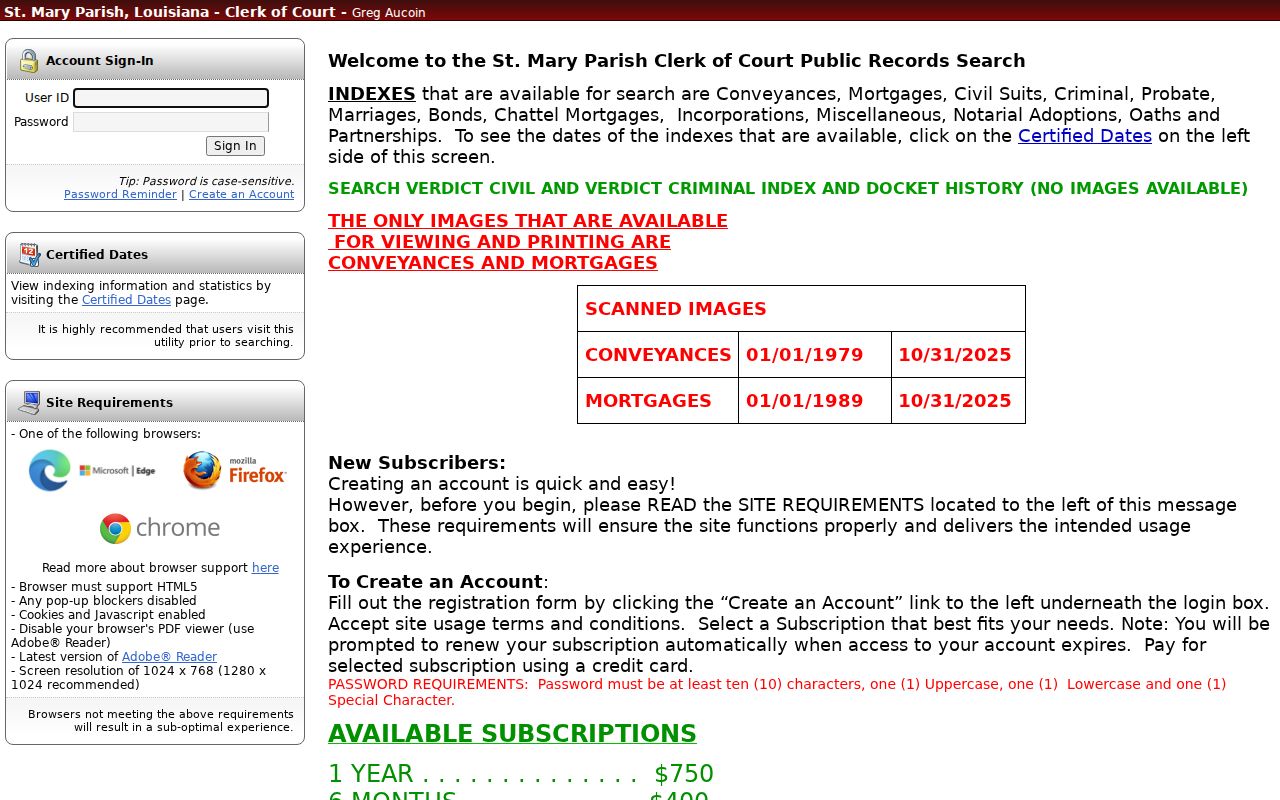
That limitation is why a useful St. Mary Parish search ends with a document request whenever the exact bill, signed judgment, sentencing minutes, or certification matters.
How to Search Case Records
- Start at the official Clerk site and open the Civil, Probate, and Criminal ESearch link, selecting the criminal index rather than land records.
- Search with the strongest identifiers available, then compare the defendant, filing date, case number, and court.
- Read the docket sequence for arraignment, plea, motions, hearings, verdict, sentencing, or warrant events.
- Write down the case number and exact document names before contacting the Clerk for copies.
Online access is only one channel. At the counter, provide the case number and requested documents. By telephone, confirm the identifier, availability, current copy or certification charge, and delivery method. A written request should state the caption or defendant name, filing-date range, case number if known, and each desired item. Under the Louisiana Public Records Law, request the nonexempt, segregable portion when a file contains protected material.
No Images: Order the Bill and Judgment
A docket line summarizes activity; it does not reproduce the filed instrument. If Verdict shows a bill, plea, or judgment but no image, ask the Clerk for that named document. The charging instrument states the filed accusation. Minutes memorialize what occurred in court. A signed judgment or certified disposition is stronger evidence of the result than a roster screenshot, press release, or bare docket label.
Request precisely: Give the St. Mary Parish case number, defendant name, approximate filing date, and whether an ordinary or certified copy is needed. Ask the Clerk to quote the current charge and available delivery choices before sending payment.
The sheriff cannot certify a judicial disposition because the sheriff does not maintain the court's original record. A request for “everything” sent to law enforcement may obtain an incident or booking record, but it does not substitute for the Clerk's bill, minutes, and judgment.
What the Case File Shows
| Identity and court | Case number, filing date, parish, division or judge, defendant, State as prosecuting party, and counsel entries. |
|---|---|
| Charges | Charge description and statute, bill or indictment events, and later amendments recorded in the docket. |
| Proceedings | Arraignment, plea, motions, hearing or trial dates, continuances, and bench-warrant or capias events when docketed. |
| Outcome | Verdict or disposition, sentencing minutes, probation term, fines and costs, and appeal or companion-case references when public. |
Not every field appears in every St. Mary Parish record. Public copies may redact personal identifiers and protected victim information. Juvenile, sealed, and expunged material can be absent from public results even when an authorized custodian retains a restricted record.
Booked Charges Versus Filed Charges
A charge shown at the St. Mary Parish Law Enforcement Center records the booking stage. After an agency submits its report, the district attorney screens the referral and may file a different count, amend a count, or file nothing. Once prosecution begins, the Clerk docket is the source for the filed case and later result. This explains why the sheriff roster and court file may legitimately differ without either record being a typographical error.
For a complete sequence, preserve the arresting agency's report number and the jail booking identifier, then search the Clerk after the filing delay. Use the case number to obtain the bill and final disposition. If a suspected error appears in a true court document, ask the Clerk what correction procedure applies; do not treat removal of an accurate record through expungement as the same process as correcting inaccurate data.
Stages of a Criminal Case
A St. Mary Parish matter commonly moves from agency referral to prosecutor screening, filing, arraignment, plea and motion practice, trial or other disposition, and sentencing. The docket may also show continuances, bench warrants, probation proceedings, or an appeal. Each entry should be read in sequence. “Arraignment” records the formal response to filed charges; it is not a conviction. A plea entry may change later, and a sentencing line should be paired with the underlying judgment or minutes when exact terms matter.
The 16th Judicial District public-defense structure is another part of the local system. The official District 16 public defender office listing shows the district serving this court:
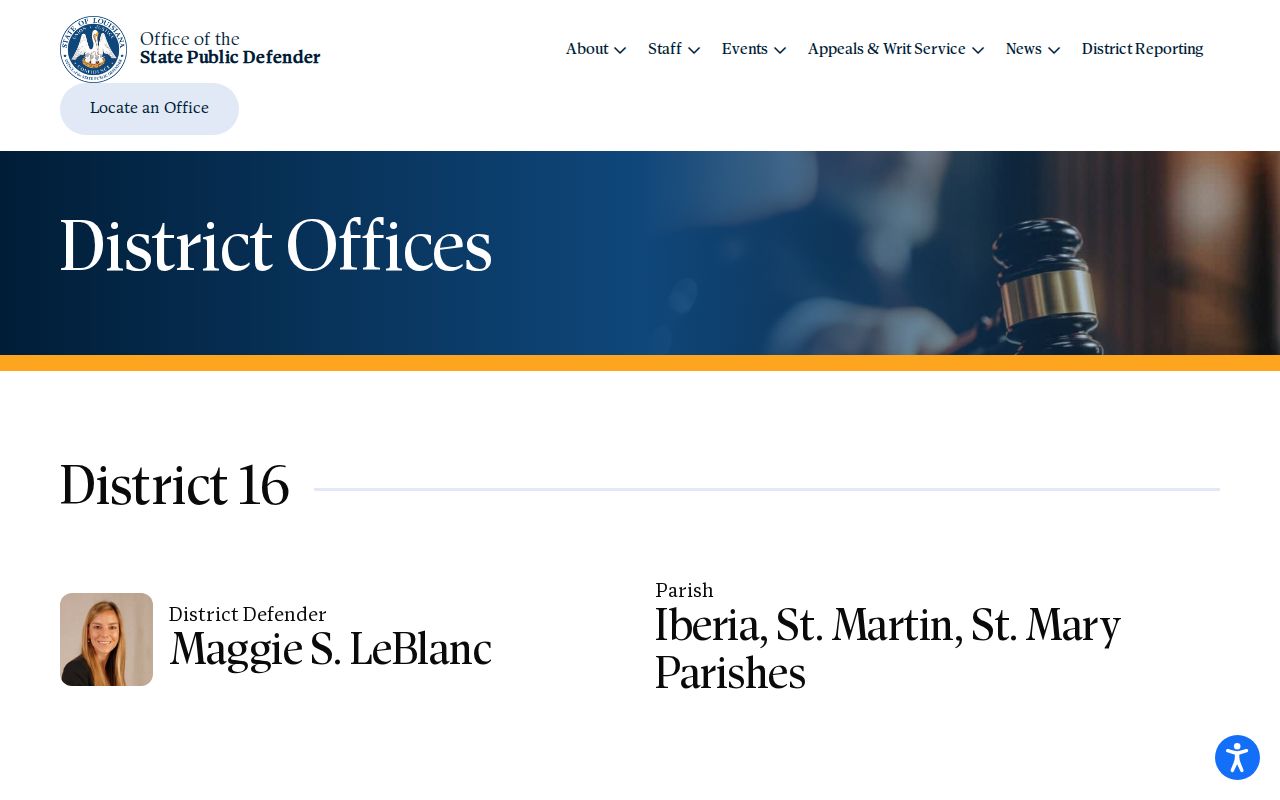
That district context helps distinguish a participating justice-system office from the Clerk, which remains the record custodian.
When a City Court Owns the Docket
A Morgan City or Franklin matter does not automatically become a Parish Clerk record. City courts maintain their own dockets for matters within their jurisdiction, and no complete free official public case-search interface was verified for Morgan City. Call or visit the appropriate court with the name, citation or case number, and date. Morgan City Court is at 7261 Highway 182 East and can be reached at 985-384-2718; its official-linked payment page is not a criminal-file search.
If the matter is a felony or otherwise filed in district court, use Verdict and the St. Mary Clerk in Franklin. Patterson municipal matters may follow a separate local path before a state charge reaches district court. The three city guides - Morgan City, Franklin, and Patterson - explain those local handoffs.
A payment portal should not be confused with a public docket search. Paying a citation online may confirm a transaction without revealing the complete procedural history or producing a certified disposition. When a city matter later appears connected to a district prosecution, ask each clerk for its own case number and record rather than assuming that one office can certify the other's proceeding.
Federal Cases Leave the Parish System
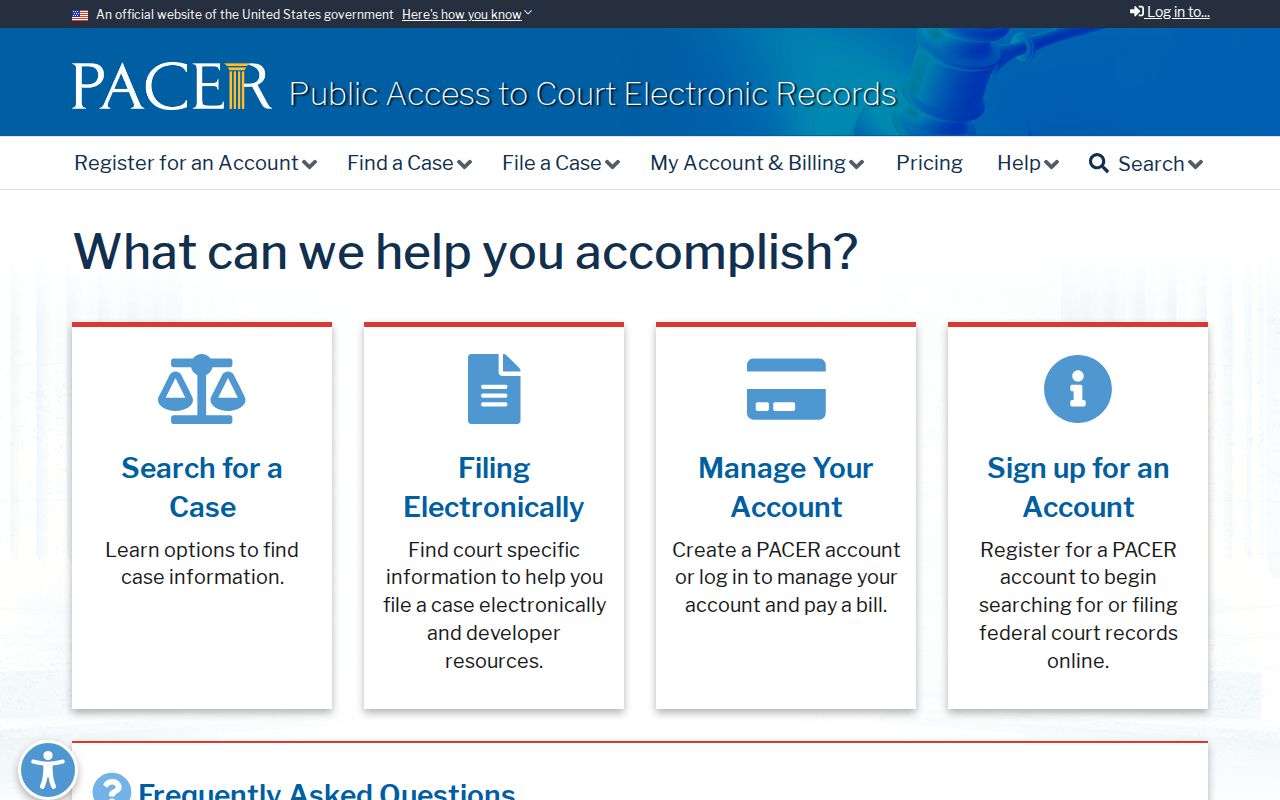
St. Mary Parish lies in the U.S. District Court for the Western District of Louisiana. A federal prosecution may never appear in Verdict. PACER is the official electronic source for federal docket sheets and filed documents after account registration; its current fee schedule and quarterly waiver policy control.
The PACER search interface represents this distinct federal channel:
CourtListener's RECAP collection may have donated copies, but it is not the official complete repository. The U.S. Attorney prosecutes federal cases, the U.S. Marshals Service handles federal custody and fugitive functions, and the Bureau of Prisons locator covers people committed to federal prison. None replaces PACER for the federal court file.
Access & Restrictions
Louisiana law broadly recognizes access to public records, but criminal files have important limits. R.S. 44:3 protects specified material connected with pending investigations or litigation, confidential sources, undercover information, and sensitive investigative details. That does not necessarily close every administrative fact; a focused request can ask for reasonably segregable nonexempt portions. Court rules and other laws also protect juveniles, victims, medical information, personal identifiers, sealed matters, and expunged records.
When no online result appears, verify spelling and aliases, allow for filing delay, confirm the court, and call the custodian. An expungement under Louisiana Code of Criminal Procedure articles 971–995 removes qualifying material from public access but does not destroy every agency copy. Only the court and authorized agencies can explain access to a restricted St. Mary Parish file.
A strong request separates public court documents from law-enforcement investigative material. Ask the Clerk for docketed pleadings, minutes, judgments, and certifications; ask the arresting agency for its own incident report. If a custodian withholds part of a responsive record, request an explanation of the applicable exception and release of portions that can reasonably be separated. For historical or genealogy research, include alternate spellings and an approximate date range, because older indexing may not behave like a current name search. For review of one's own matter, compare the certified court result with the arresting agency and Louisiana repository records rather than assuming an update reached every system at once.